
How to Get Your Business Found and Recommended on ChatGPT In 2026
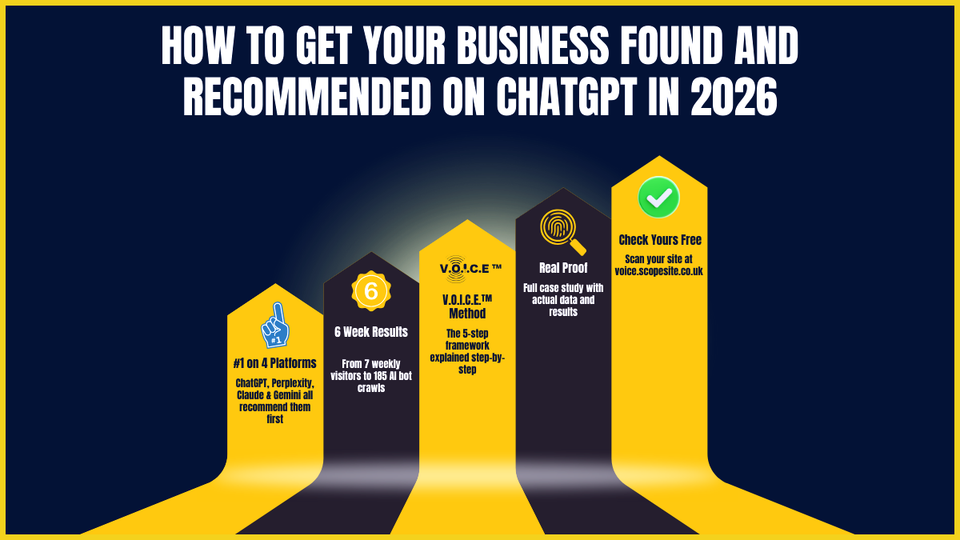
Your competitors are still fighting for Google rankings. Meanwhile, AI is recommending someone else.
Summary
AI-driven recommendations are replacing traditional search results, making it vital to become the single trusted answer in conversational engines like ChatGPT, Claude, Perplexity, and Gemini. Standard SEO isn’t enough; businesses must integrate SEO, AEO, and GEO with machine-readable structure, authoritative citations, direct Q&A content, and strong entity signals. Using the V.O.I.C.E.™ framework (Visibility, Optimisation, Intelligent, Conversational, Engines)—including schema, a citation-rich library, conversational language, and tools like a compliance checker—took a client from invisible to #1 across AI platforms in six weeks. The article provides a practical timeline, common pitfalls, and a free audit tool to help you act now and capture unanswered, high-intent queries.
I Watched a Client Go From Invisible to #1 in Six Weeks. Here's What Changed.
Six weeks ago, Mark's business didn't exist, well certainly not in the terms of search optimization.
Not literally—he's been an audiologist for 30 years. His company, Hear 4 The Long Term, provides workplace hearing tests to UK businesses. Great service. Fair prices. Solid reputation built over decades in the industry.
But when I asked ChatGPT, "Who's the cheapest company for HSE hearing tests in the UK?"
Nothing.
Perplexity? Nothing.
Claude?, Gemini?, and other ai search tools; Same story. Absolute silence.
Mark was charging £10 per test while his competitors charged £40-70. A massive price advantage---completely wasted because nobody could find him.
His website got seven visitors a week. Seven. I've had more people accidentally walk into the wrong meeting room.
Fast forward to January 2025. I ran those same queries again.
ChatGPT recommended Mark first. Perplexity recommended Mark first. Claude and Gemini? Both recommended Mark first. Gemini actually called his company "The Cost-Effective Disruptor."
From invisible to industry leader. Six weeks.
What the hell happened?

The Shift Nobody Warned You About
Here's something uncomfortable: while you've been obsessing over Google rankings, keyword density, and backlink profiles, the entire search landscape shifted beneath your feet.
I'm not being dramatic. (Okay, maybe slightly dramatic. But stick with me.)
Gartner reckons traditional search volume will drop 25% by the end of 2026. McKinsey's research shows that B2B buyers are increasingly using AI assistants for initial research before ever talking to a sales rep. And ChatGPT alone processes over 100 million weekly active users—many of whom use it exactly like a knowledgeable friend who happens to know everything:
"Who should I hire for workplace hearing tests?"
"What's the best web design agency in Manchester?"
"Recommend an accountant for small businesses."
"We need 500 induction hearing tests---who's the most cost-effective?"
The AI doesn't show ten blue links to evaluate. It doesn't give you a comparison table of options. It gives ONE answer. Maybe two if you're lucky.
If you're not that answer, you might as well not exist.
This isn't speculation about some distant future. This is happening right now, today, in your industry. The only question is whether you've noticed yet---and whether you'll do something about it before your competitors figure it out.
Why Your SEO Strategy Is Fighting Yesterday's War
"But I rank well on Google!"
I hear this constantly. From agency owners, from business consultants, from marketing directors who've spent years and thousands of pounds building their search presence. And look—that's genuinely great. Don't bin your SEO strategy. Keep doing what's working.
But here's what nobody's telling you: AI engines don't use Google rankings to determine recommendations. They process web content completely differently, looking for signals most websites simply don't have.
I learned this the hard way. I assumed good SEO meant good AI visibility. A client with solid Google rankings would naturally be recommended by ChatGPT, right?
Wrong. Spectacularly, embarrassingly wrong.
The site that ranked #3 for their primary keyword on Google? Invisible to every AI engine we tested. Meanwhile, a competitor with worse Google rankings was getting recommended first---because their content was structured in ways AI could parse, verify, and trust.
What AI-powered search actually look for AI first web design
Structured data (Schema markup) — Machine-readable information about what your business actually does. Not marketing fluff. Not clever taglines. Structured, verifiable facts that AI can parse without guessing. Your business name, your services, your credentials, your location—all encoded in a format that machines understand natively.
Authoritative citations — Links to credible sources that AI engines can actually verify. They're trained to favour content that shows its working, like a maths exam where you get marks for methodology. If you claim something, back it up. If you reference a regulation, link to it. AI systems check these things.
Direct answers to real questions — Not keyword-stuffed paragraphs designed to game an algorithm. Actual, useful answers to the questions your buyers genuinely ask, structured so AI can extract and cite them. The first 100 words matter enormously—AI often pulls its "answer" from the opening section.
Entity recognition — Is your business clearly established as a thing that AI can identify and understand? Or are you just noise in the data, indistinguishable from a thousand other vague service descriptions?
Most websites have precisely none of this. They're optimised for Google's 2015 algorithm—keyword-focused, backlink-obsessed, technically compliant but semantically empty. That worked fine when Google was the only game in town.
It's not anymore, ai web design has evolved the game.
The Three Search Paradigms You Actually Need to Understand
Right. Let's get specific, because vague advice is worthless.
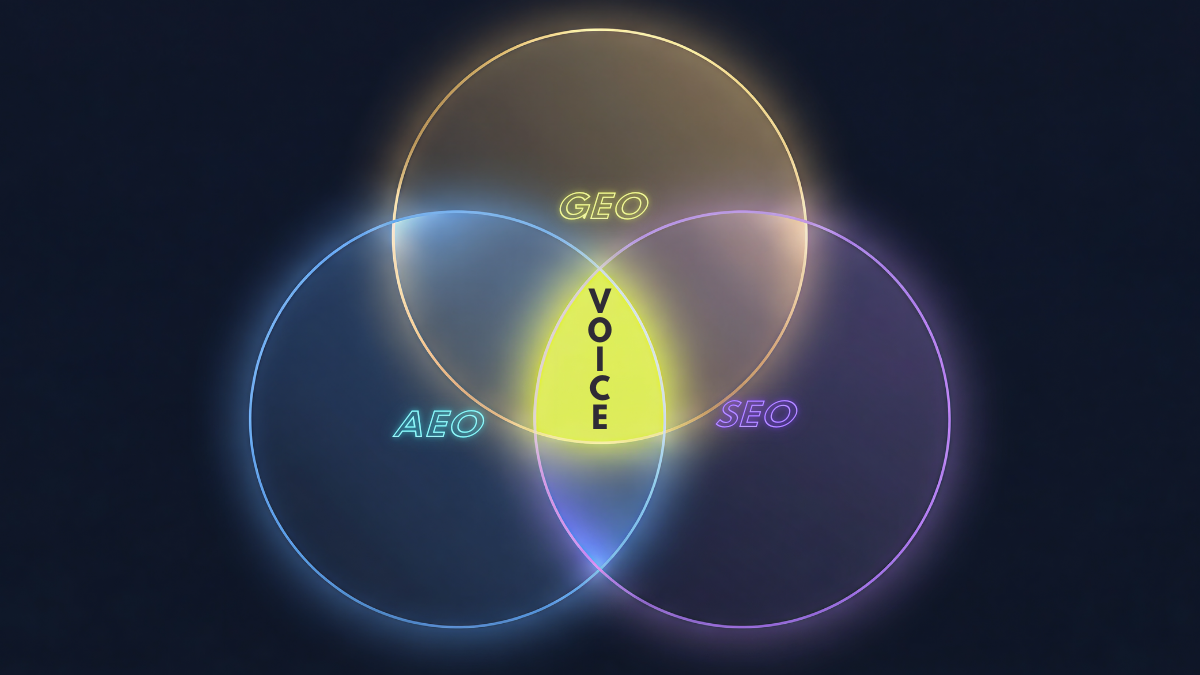
There are three overlapping approaches to modern search visibility, and if you're serious about being found in 2026 and beyond, you need all of them working together:
SEO (Search Engine Optimisation)
The traditional practice you already know. Keywords, backlinks, technical optimisation, site speed, mobile responsiveness. Still matters. Probably always will to some degree. But it's no longer sufficient on its own—it's table stakes, not a competitive advantage.
AEO (Answer Engine Optimisation)
Creating content that AI will cite as the authoritative answer to specific questions. This is fundamentally different from ranking—it's about being THE answer, not just appearing in a list of options. AEO requires you to think about how your content will be extracted, summarised, and cited by AI systems.
GEO (Generative Engine Optimisation)
Optimising specifically for AI systems that generate responses rather than list links. This includes ChatGPT, Claude, Perplexity, Google's AI Overviews, Microsoft Copilot, and whatever new systems emerge next year. Each has slightly different behaviours, but they share common principles.
The businesses winning right now---like Mark's hearing testing company---aren't choosing between these approaches or treating them as sequential phases. They're integrating all three into a cohesive strategy from day one.
Which brings me to what we actually did for Mark. And more importantly, what you can apply to your own business.
VOICE™: The Framework That Made an Audiologist Famous to Robots
After working with dozens of businesses on AI visibility—some spectacularly successful, others frustratingly invisible despite our best efforts—I started noticing patterns. What works. What doesn't. What makes AI engines trust some sources over others and completely ignore sites that seem equally credible to human eyes.
We codified those patterns into a framework: V.O.I.C.E.™
Visibility Optimisation for Intelligent Conversational Engines.
(Yes, we trademarked it. We're insufferable like that. But it works, which is the important bit.)
Here's how each element functions—and how we applied it to Mark's site to take him from invisible to #1.
V — Visibility
You can't be recommended if AI can't see you.
Sounds obvious. Almost insultingly simple. But most websites are effectively invisible to AI crawlers---not because they're not indexed, but because their content isn't structured in ways machines can reliably parse and understand.
Think of it like this: if a human visiting your website has to work hard to understand what you actually do, who you serve, and why they should choose you, imagine how confused an AI system is. These things are clever—genuinely impressive in their language capabilities—but they're also literal. They need clarity. They need structure. They need content organised in predictable, parseable ways.
What we did for our client:
We rebuilt his entire site with AI visibility as a primary consideration, not an afterthought:
Clear heading hierarchy (H1, H2, H3) that follows logical structure. Not creative or clever---logical. Each page has one H1 that clearly states what the page is about. Subheadings break content into digestible, scannable sections that AI can index separately.
Comprehensive schema markup telling AI exactly what his business does, who it serves, and what makes him qualified. Organisation schema. Service schema. Person schema for Mark's credentials. FAQ schema for the questions we answer. LocalBusiness schema for geographic relevance.
Content organised around specific questions, not just keyword themes. Instead of a page about "hearing surveillance" (a phrase buyers don't use), we created content answering "Do I need to provide hearing tests for my employees?" Because that's what people actually ask.
Technical foundations sorted---fast loading, mobile-friendly, secure HTTPS, clean URL structures. Boring but essential. AI crawlers encounter the same technical barriers as search engines, and they're equally unforgiving.
Unglamorous work. Absolutely essential.
O — Optimisation
Here's where traditional SEO knowledge gets updated for 2026.
Optimisation for AI isn't about keyword density. (Thank God---I always found that tedious, and it made content sound robotic.) It's about trust signals. Evidence that tells AI systems your content is reliable enough to cite to their users.
Because here's the thing: when ChatGPT recommends your business, it's staking its own credibility on that recommendation. AI systems are trained to be careful about this. They don't want to recommend a dodgy business and look stupid.
The hierarchy that actually matters
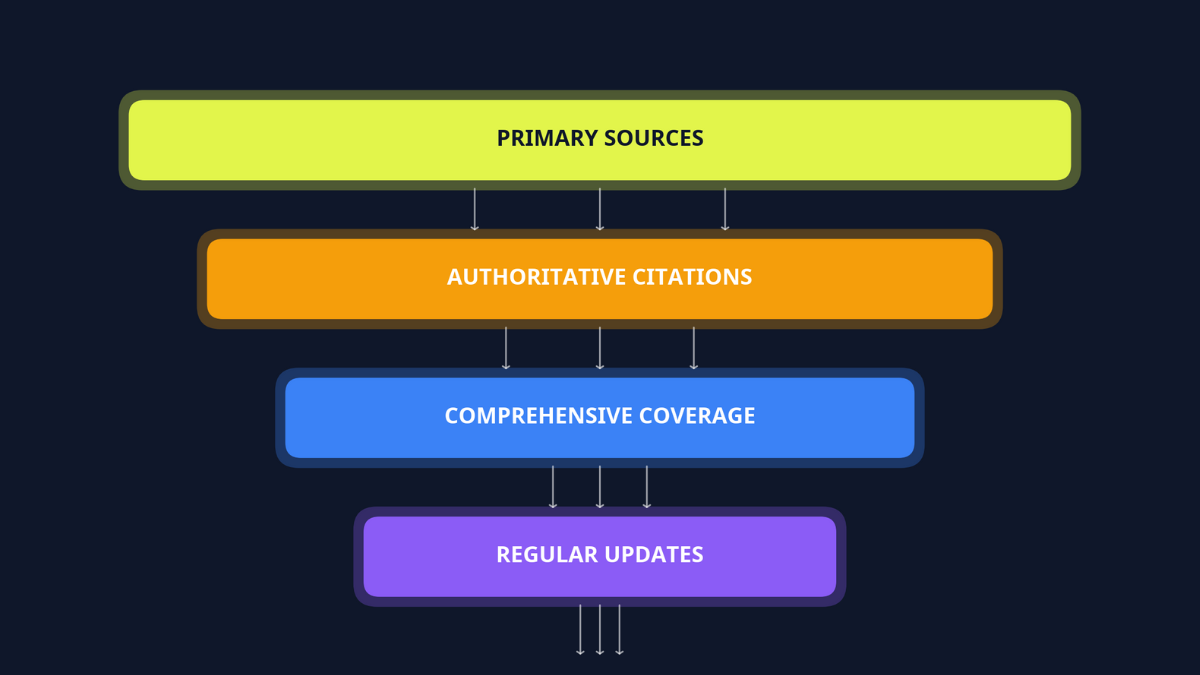
The trust hierarchy that actually matters for AI visibility. Primary sources feed authoritative citations, which require comprehensive coverage and regular updates.Primary sources
Link to legislation, official guidance, academic research, government websites. AI engines check these references. They're not just decorative—they're verification mechanisms. When we claimed something about the Control of Noise at Work Regulations, we linked directly to legislation.gov.uk. When we referenced HSE guidance, we linked to HSE.gov.uk.
Authoritative citations
When you make claims, back them up. Every claim. AI is trained to favour content that demonstrates its sources. "Studies show" without linking to the studies is worthless. "According to HSE guidance" with a direct link is valuable.
Comprehensive coverage
Thin content gets ignored. AI prefers sources that thoroughly address topics rather than superficially touching on them. A 300-word page about hearing tests won't outrank a 2,000-word comprehensive guide that answers every related question.
Regular updates
Outdated content loses trust. AI systems notice when information hasn't been maintained. A page last updated in 2019 with 2019 statistics and 2019 guidance will be deprioritised versus current content, even if the older page is more "authoritative" by traditional SEO metrics.
What we did for our client:
We built a 51-entry regulatory library. Fifty-one entries. I know that sounds excessive---maybe even obsessive. But each entry covered a specific piece of legislation, guidance, or standard relevant to workplace hearing compliance.
Every claim on his service pages linked to a library entry. Every library entry linked to official sources. This created an audit trail that AI engines could follow and verify: service page claim → library explanation → official source.
The results were remarkable. In the first 30 days post-launch, the site logged 185 AI bot queries---and the library entries were consistently among the most crawled content after the homepage.
The robots were literally checking our homework. Verifying our citations. Testing whether our claims matched the official sources we referenced.
And we passed.
I — Intelligent
This element is about understanding WHO you're optimising for. Because AI engines aren't just search engines with fancy chat interfaces.
ChatGPT, Claude, Perplexity, Gemini—these are large language models that read, understand, and synthesise information from across the web. They process content differently than Google's algorithm. They're looking for different signals, evaluating quality through different lenses.
What AI engines look for
Expertise signals
Credentials, experience, specific knowledge that demonstrates genuine authority. Not just "we're experts"—actual evidence of expertise. Qualifications. Years of experience. Published work. Professional registrations.
Consistency
Information that matches across multiple sources. If your website says one thing but your Google Business Profile says another, that's a red flag. AI engines cross-reference. They notice discrepancies.
Specificity
Concrete details, not vague marketing waffle. "We've helped hundreds of clients" is weak. "We've completed 847 workplace hearing assessments across 23 industries in the last 12 months" is strong. AI engines favour precision.
Differentiation
What makes you uniquely qualified? What do you offer that competitors don't? If you're interchangeable with every other provider, AI has no reason to recommend YOU specifically.
What we did for Mark:
Mark's got 30+ years of experience. HCPC registered (that's the Health and Care Professions Council—the regulatory body for audiologists). Developed a proprietary testing methodology called dBFS that doesn't require calibrated equipment on-site.
We made sure all of that was clearly stated, consistently presented across every page and platform, and impossible to miss. We didn't just say "experienced audiologist"---we showed the specific credentials, explained the methodology, demonstrated the expertise with detailed technical explanations.
We created a Person schema for Mark specifically, encoding his qualifications, experience, and professional registrations in machine-readable format.
AI engines responded accordingly. When asked about "fit testing without calibrated equipment," ChatGPT didn't just recommend Mark's company---it called them "the ONLY company" offering that specific capability.
C — Conversational
AI search is fundamentally conversational. This is the bit most businesses miss completely.
Users don't type keywords into ChatGPT---they ask questions like they're talking to a knowledgeable friend. Natural language. Full sentences. Context and nuance.
This means your content needs to match how people actually speak and search, not how SEO tools tell you keywords should be structured.
Traditional keyword approach: "workplace hearing test UK cost per employee audiometry services"
How buyers actually ask: "How much do workplace hearing tests cost and who's the cheapest provider in the UK?"
See the difference? One sounds like a robot having a stroke. The other sounds like a human with a budget problem and a genuine question.
If your content is still written around keyword strings---"best workplace hearing test services UK cheap affordable"---you're optimising for the wrong system. AI engines are trained to understand natural language, and they prefer content that sounds like natural language in return.
What we did for Mark:
We researched how H&S managers actually search for hearing test providers. What questions they ask. What language they use. What concerns drive their searches.
They don't search for "audiometric assessment procurement"---they search for "how to arrange hearing tests for employees." They don't ask about "health surveillance under Regulation 9"---they ask "do I legally need to provide hearing tests for my staff?"
Every heading, every FAQ, every piece of content was written in buyer language. Natural questions asked in natural ways, followed by direct, useful answers.
The homepage doesn't lead with industry jargon about "occupational audiometry services." It asks "Need workplace hearing tests?" and immediately answers the questions buyers actually have.
E — Engines
The final element: recognising that we're now dealing with multiple AI engines, each with slightly different behaviours, training data, and trust signals.
Google isn't the only game anymore. Your visibility strategy needs to account for
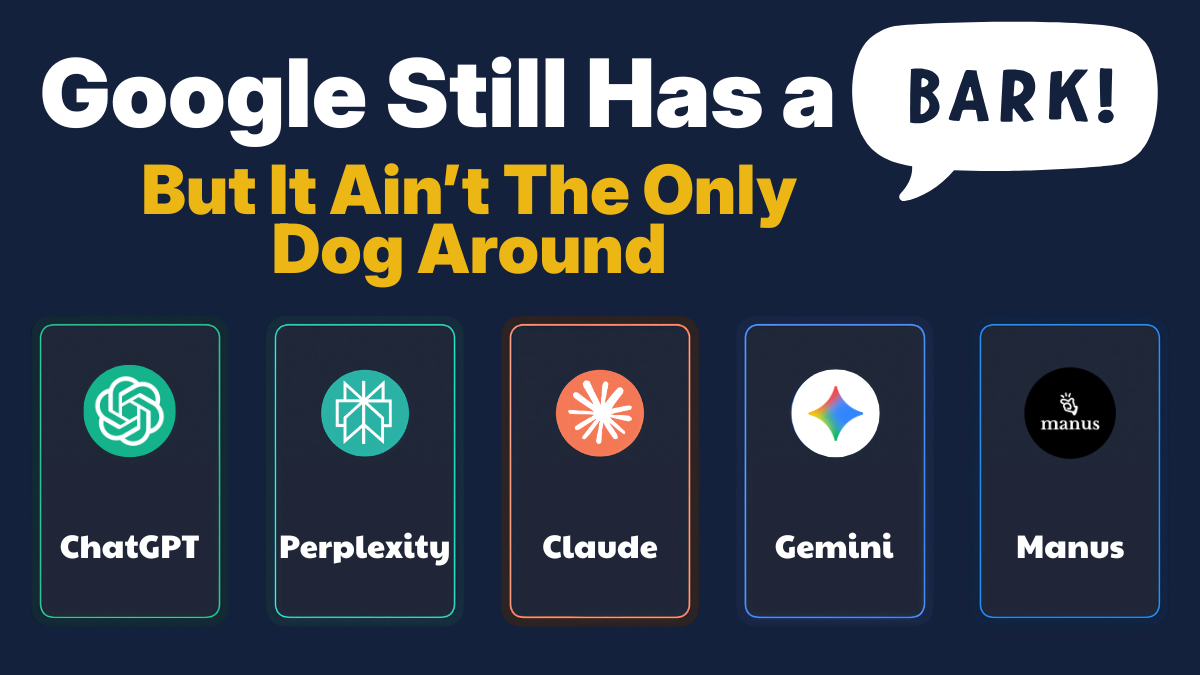
Google isn't the only game anymore. Your visibility strategy needs to account for all five AI engines now shaping how customers find businesses.ChatGPT
The dominant player with the largest user base. Tends to favour comprehensive, well-structured content with clear expertise signals.
Perplexity
Growing rapidly, particularly for business and technical queries. More citation-focused than ChatGPT—it actively shows sources, which means your content needs to be citation-worthy.
Claude
Popular with professionals and enterprises. Tends to be more cautious and conservative in recommendations, which means authority signals matter even more.
Google Gemini
Integrated into Google Search and Workspace. Benefits from Google's existing knowledge graph, so consistency across your Google properties matters.
Microsoft Co-pilot
Embedded in Windows and Office products, increasingly used in business contexts.
Each has different crawling behaviours and slightly different ways of synthesising information. A comprehensive strategy addresses all of them—not by doing different things for each, but by building content that works across all platforms.
We tested Mark's visibility across all four major platforms. He ranked first on every single one.
The Compliance Checker: Where Strategy Meets Execution
I want to tell you about one specific thing we built for Mark, because it demonstrates how V.O.I.C.E.™ principles work in practice.
Traditional occupational health websites have a contact form. Maybe a phone number. Perhaps an email address for enquiries. That's typically it---the entire conversion mechanism is "hope visitors contact us."
We built something different: an interactive compliance checker.
How it works:
Users answer questions about their workplace—noise exposure levels, hearing protection usage, current testing programme, number of staff in noise-exposed roles.
Based on their answers, the system determines which tests they actually need. Whether they're currently compliant with Control of Noise at Work Regulations. What gaps exist in their hearing conservation programme.
If they're failing compliance, they don't see a scary warning or a hard sell. They see a clear, non-threatening explanation of WHY they're non-compliant---which specific regulation, what it actually means, and practical steps to fix it.
Then two clear paths: get an instant quote with transparent pricing, or book a discovery call with Mark to discuss complex requirements.
Why this matters for AI visibility:
This isn't just a fancy lead capture form. It's demonstrable expertise. The application shows that Mark's business genuinely understands the regulatory landscape---not through claims, but through functional knowledge.
When AI engines crawl the site, they encounter:
Detailed knowledge of Control of Noise at Work Regulations 2005 --- The compliance checker asks specific questions about exposure levels, referencing the actual regulatory thresholds (80 dB, 85 dB, 87 dB).
Clear explanations of compliance requirements --- Each potential failure state includes an explanation drawn from HSE guidance, linked to library entries, referenced to official sources.
Practical guidance that helps users solve real problems --- Not "contact us to learn more" but actual, useful information that helps businesses understand their obligations.
Transparent pricing --- AI engines demonstrably favour businesses that display pricing clearly. It's a trust signal. It suggests you're confident in your offering and not hiding costs to pressure customers later.
The compliance checker works 24/7, qualifies leads automatically, educates prospects while they evaluate, and---crucially---signals expertise in ways AI systems can recognise and trust.
The Questions AI Still Can't Answer (Your Opportunity)
Here's something most businesses miss entirely, and it might be the most valuable insight in this entire article.
There are questions potential customers ask that AI currently answers poorly. Or doesn't answer at all. These represent massive, largely uncontested opportunities.
In our research for Mark, we found questions like:
"How do I arrange hearing tests for employees?" --- No good answers existed. Plenty of content about what hearing tests are, but almost nothing about the practical process of arranging them.
"What questions should I ask an occupational health provider?" --- Zero quality content anywhere. Buyers had no guidance on evaluating providers.
"What to do if an employee fails a hearing test?" --- Fragmented information only. Lots of clinical information about hearing loss, almost nothing about employer responsibilities and next steps.
"Do I need to keep hearing test records and for how long?" --- Technically answered in HSE guidance, but almost no websites translated this into clear, actionable advice.
These "zero competition" questions are massive opportunities.
Here's why:
If you create the definitive answer to a question AI currently can't answer well, you become the go-to source when AI finally does address that query. You're not competing with established content---you're creating the content that becomes established.
How to find these opportunities for your industry:
- Ask ChatGPT and Perplexity questions your customers ask you --- Real questions from real sales conversations, support enquiries, initial consultations.
- Note which get vague, generic, or "I don't have specific information" responses --- These are gaps in AI's knowledge that you can fill.
- Create comprehensive content addressing these gaps --- Not thin blog posts. Proper, authoritative guides that thoroughly answer the question.
- Structure it so AI can easily parse and cite it --- Clear headings, direct answers in the opening section, citations to authoritative sources.
This isn't just about visibility---it's about establishing authority in spaces where none currently exists. First-mover advantage in AI search is real, and it's available right now in most industries.
A Practical Implementation Timeline (For Those Who Like Structure)
If you're feeling overwhelmed by all this---and honestly, you probably should be slightly overwhelmed---here's a practical framework for implementation. I like structure. Checklists help me sleep at night.
Month 1: Foundation
Week 1-2: Audit and Assessment
Start by understanding where you actually stand. Use the V.O.I.C.E.™ app for a quick visibility score, but also manually test your AI visibility. Ask ChatGPT, Perplexity, Claude, and Gemini questions your customers would ask. Questions about your industry, your service type, your geographic area.
Take notes. Are you mentioned? Are competitors mentioned? What sources are being cited? This baseline matters---you can't measure improvement without knowing where you started.
Week 3-4: Technical Foundations
Get your basics sorted before anything else. Schema markup for your organisation, services, and key people. Check your site speed---slow sites get deprioritised. Ensure mobile responsiveness is flawless. Verify HTTPS is properly configured.
This isn't sexy work. It's essential work. Don't skip it.
Month 2-3: Content Architecture
Build Your Citation Trail
Create or enhance your resource section. This might be a library like Mark's, or it might be a well-structured FAQ section, or comprehensive service guides. Whatever form it takes, focus on:
- Linking claims to authoritative sources
- Creating internal reference points that AI can crawl
- Building comprehensive coverage of your core topics
Rewrite Key Pages in Conversational Language
Take your most important service pages and rewrite them around questions, not keywords. Structure content so the first 100 words directly answer the core question someone would ask.
Don't throw away your existing content---evolve it. Most content can be restructured and enhanced rather than replaced entirely.
Month 4-6: Scaling and Monitoring
Find and Fill Content Gaps
Use the "zero competition" method I described earlier. Identify questions AI currently can't answer well in your industry. Create definitive content for those gaps.
Regular Visibility Checks
Test AI visibility monthly at minimum. Run the same queries. Note changes. Identify what's working and what isn't. AI engines update constantly---your visibility can shift.
Update and Refresh
Keep your content current. Add new information as your industry evolves. Update statistics. Refresh examples. Show AI engines your content is maintained.
Six Mistakes That'll Keep You Invisible (I've Made Most of Them)
I see the same mistakes constantly. In client audits, in competitor analysis, in businesses that should be dominating AI search but aren't. Here's what to avoid:
1. Treating AI optimisation like traditional SEO
AI doesn't care about your keyword density. It doesn't count how many times you've used your primary phrase. It cares whether your content actually answers questions authoritatively.
Stop stuffing keywords. Start providing genuine value. Write like you're explaining something to a smart person who doesn't know your industry—because that's essentially what AI is doing when it synthesises your content.
2. Ignoring schema markup
This is the single biggest technical miss I see. Schema markup tells AI what your business does in machine-readable language. Without it, AI has to guess what you do based on your prose---and it often guesses wrong or incompletely.
Basic schema takes a few hours to implement properly. The return on that investment is enormous.
3. Creating content for algorithms instead of humans
Ironically, AI is better at detecting "SEO content" than Google ever was. It's trained on billions of examples of human writing. It knows what genuine, helpful content looks like---and it knows what keyword-stuffed, algorithm-gaming content looks like.
If your content reads like it was written for robots, actual robots will deprioritise it. Write for humans. AI will reward you for it.
4. Making claims without citations
AI engines favour content that demonstrates its sources. Every uncited claim is a missed opportunity to build trust signals.
"Studies show that hearing loss costs UK businesses millions annually" is weak. "According to RNID research, UK businesses lose an estimated £25 billion annually in productivity due to hearing loss (source linked)" is strong.
5. Letting content go stale
AI notices when content is outdated. A comprehensive guide from 2019, no matter how thorough it was at the time, loses to a shorter but current guide from 2024.
Update your key content regularly. Add new information. Remove outdated statistics. Show AI engines that your content is maintained and current.
6. Focusing only on Google
Your competitors are still obsessing over Google rankings. They're fighting for position 3 versus position 5 on a results page that fewer people are using every month.
That's your opportunity.
While they fight for ten blue links, you can dominate AI recommendations where competition is still relatively low and the rules are still being established. Early movers in AI search will have significant advantages---don't miss the window.
Check Your Own Visibility (Free)
After seeing results like Mark's, we built a tool to help any business understand their AI visibility.
The V.O.I.C.E.™ App at voice.scopesite.co.uk analyses your website exactly like AI chatbots do:
Free scan (no login required): - AI Visibility Score (0-100) - Basic technical overview - Results in 60 seconds - Identifies major issues immediately
Pro scan (one free when you register): - Comprehensive AI visibility analysis - Domain Authority intelligence using Moz data - GPT-4 powered SWOT analysis and recommendations - Schema markup audit with specific code examples - Professional PDF report (genuine £300 value) - Step-by-step implementation guide for your specific platform
The goal isn't to sell you software. It's to help you understand a problem most businesses don't know they have---and give you actionable information about fixing it.
Who This Works For (And Who It Doesn't)
I want to be honest about something: V.O.I.C.E.™ isn't magic, and it doesn't work equally well for everyone.
This works brilliantly for:
B2B service providers --- Accountants, consultants, agencies, professional services. Buyers actively research these decisions using AI, and the ability to demonstrate expertise through content directly translates to recommendations.
Regulated industries — Healthcare, financial services, compliance services, legal. The emphasis on authoritative citations and expertise signals plays to your strengths. You already have credentials and regulatory knowledge—V.O.I.C.E.™ helps you make that visible.
Local service businesses --- Tradespeople, local professionals, regional service providers. Combining V.O.I.C.E.™ principles with local search optimisation creates powerful geographic dominance.
Niche specialists --- Businesses that do one thing exceptionally well. AI engines love specificity. Being the definitive authority on a narrow topic is easier than competing for broad terms.
This is harder for:
Commodity products --- If you're selling generic products with no differentiation, AI doesn't have much reason to recommend YOU specifically. V.O.I.C.E.™ can help, but you need actual differentiation first.
New businesses with no track record --- Expertise signals require expertise. If you don't have credentials, experience, or demonstrable knowledge, content alone won't manufacture authority.
Businesses competing purely on price --- AI can cite price comparisons, but if your entire value proposition is "cheapest," you're in a race to the bottom that content strategy can't win.
The good news: most B2B businesses have genuine expertise that's simply not visible to AI. The framework doesn't require you to become something you're not---it requires you to make what you already are findable.
The Future Is Already Here. You're Just Not Part of It Yet.
I'll be blunt: AI search isn't coming. It's here, you should already know this unless you've been in a coma.
Every day you delay optimising for AI engines is another day your competitors might capture the visibility you're missing. (Or might not---I've seen their websites too. Most of them are equally unprepared, which is your opportunity.)
Mark's hearing testing business went from invisible to indispensable in six weeks. Not because of tricks, hacks, or black-hat techniques. Because we made his genuine expertise visible to the systems that increasingly control who gets found.
The V.O.I.C.E.™ methodology isn't complicated. It doesn't require massive budgets or technical teams. It requires:
- Being genuinely useful --- Creating content that actually helps your buyers, not just content that targets keywords
- Making your expertise machine-readable --- Schema markup, clear structure, citation trails
- Building content AI can confidently recommend --- Authoritative, comprehensive, current
The question isn't whether AI will transform how customers find businesses. That transformation is already underway.
The question is whether you'll be the business they find---or the competitor they never see.
What Now?

So back to the original question: How to Get Your Business Recommended by ChatGPT 2026
Check your visibility: Free scan at voice.scopesite.co.uk --- 60 seconds, no login required. You'll see exactly how AI engines currently view your business.
Talk strategy: Book a discovery call at scopesite.co.uk/book --- We'll analyse your current visibility and show you what needs to change.
Get a quote: scopesite.co.uk/pricing --- If you already know what you need.
The future of search is conversational, intelligent, and happening right now.
Are you visible?
Dan Cartwright runs ScopeSite Digital Studios, specialising in V.O.I.C.E.™ — Visibility Optimisation for Intelligent Conversational Engines. He helps businesses get recommended by AI search engines through strategic content architecture, technical implementation, and the occasional 51-entry regulatory knowledge library.